

ホーム
ブログ
フォトトピックス
「ネパールと日本の友好を深めよう! シンポジウム」Let's deepen friendship between Nepal and Japan! Symposium"
「ネパールと日本の友好を深めよう! シンポジウム」Let's deepen friendship between Nepal and Japan! Symposium"

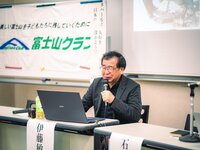


富士山クラブは、「ネパールと日本の友好を深めよう! シンポジウム」を昨年の12月15日(日)に富士河口湖町船津の山梨県立富士山世界遺産センターで 開催しました(企画・主催 富士山クラブ、富士河口湖町委託国際交流事業)。
富士河口湖町には、インバウンドの増加に伴い、宿泊施設や飲食業などで働くネパールから来られた方々が、家族とともに300人以上も住んでいます。当クラブでも「富士山エベレスト姉妹山提携」が今年10周年の節目の年を迎えたこともあり、関わりの深いネパールをテーマにシンポジウムを企画しました。
シンポでは、冒頭、姉妹山提携に尽力し、ネパールで学校建設や教育支援、ヒマラヤの山麓で植林活動を続けてきた当クラブの野口健理事長(写真上左)が、事前に収録したビデオを通じてメッセージ。「ネパールに行くと思うのは、ネパールの方たちの謙虚さであり、日本でなくてはならない存在になっている。また、日本の山には多くのシェルパが八ヶ岳や富士山、北アルプスなどの多くの山小屋で働き、管理してくれている。今は、ネパールのシェルパ抜きでは日本の登山は難しいほどの状況だ。問題は、その大半が観光ビザで来日していることだ。シェルパ抜きでは成り立たないのだから、正規のルートで日本に来てもらい、万一、事故があったときには、保険がおりるような制度が必要ではないかと思っている。一方で、エベレストに行くと外国人登山者がごみを落とし、汚くしていた。そこで、山をきれいにしようという運動を始め、富士山とエベレストの同時清掃などを続けてきた。ヒマラヤには日本人が行き、富士山には日本在住のネパール人が行って清掃活動をしてきた。長い積み重ねを通じ、二つの世界的に有名な山をきれいにするということで世界に向けて山を守っていくことをアピールしていければと思っている」と語りました。
続いてネパールを舞台に映画製作を続けてきた伊藤敏朗監督(写真上中央)が講演。ネパールの社会や文化と歴史について詳しく解説しながら、自ら現地で制作、監督した「カタプタリ」「カトマンズに散る花」「カトマンズの約束」3部作の映像と、制作の経緯や裏話を織り交ぜ、監督が体験された秘話を披露してくれました。
伊藤監督は冒頭で、「子供たちの目がキラキラ輝いている」ことにまず感銘を受けたと語ったあと、「ネパールは145の部族から成る多言語・他民族国家だが、農村部に行くと日本に来たかのような懐かしい既視感を感じる。ここで生まれたような心の風景で、日本の若い人も同じことを言っていた」と日本との親和性に触れました。また、「カトマンズの約束」を撮影中(2015年)にネパールで大地震に発生し、脚本も変更してカトマンズの市民のボランティアに支えられながら完成させた苦労話も。その際、被災した女性が「家は壊れたけれど、あなたの映画の中に残っている」という言葉に励まされて制作を続けることができ、人々との絆が一層、深まったと感じたと述べました。
続いてネパール出身で国際奨学財団職員のシュレスタ・ラジブさん(写真上右)が講演。ネパールと日本の生活観の違いについて「日本は家族や地域社会との関係が希薄になりつつあるが、ネパールは今もその絆は強い。一方で、日本より時間の流れは緩やかだが、地域での宗教的行事や儀式に多くの時間を割くことが多い」などと違いについて指摘しました。
第2部では「友好の輪をひろげよう!」をテーマに伊藤監督、ラジブさんのほか、富士山クラブの理事で、長年ネパールで学校設置に尽力されてきた当クラブの石坂政俊理事に加わってもらい、ネパールと日本の生活観の違いや共通点、未来に向けた想いなどについて語ってもらいました。
石坂さんは1992年から25年間にわたってネパールで学校建設に携わってきた体験談を語ったあと、「最近は地方を離れて都市部に移住する若者が都市の人口集中を促す一方、地方の過疎化も進んでいる」などの問題点に触れました。
続いてのシンポジウムでは、伊藤監督が「家族を大切にする習慣は強いが、最近は海外で働く若者が急増している。家族とはスマホやSNSでつながっていて、かつてとは想像を絶する事態となりつつある」と語ると、ラジブ氏も「日本でも2008年には8万人だったネパールからの移住者が今はその3倍になった」と応じ、最後は会場の参加者との間で活発な質疑応答が行われました。
The Fujisan Club held the "Let's deepen friendship between Nepal and Japan! Symposium" on Sunday, December 15th last year at the Mt. Fuji World Heritage Center in Fujikawaguchiko Town (planned and organized by the Fujisan Club, commissioned by Fujikawaguchiko Town).
With the increase by inbound tourism to Mt. Fuji, more than 300 people from Nepal who work in the accommodation and food service industries live in Fujikawaguchiko town with their families. As the "Mt. Fuji and Mt. Everest Sister Mountain Partnership" is celebrating its 10th anniversary this year, the club planned a symposium on the theme of Nepal, with which it has a deep connection.
At the beginning of the symposium, the club's Chairman Noguchi Ken (pictured above left), who has worked hard to establish the sister mountain partnership, building schools and providing educational support in Nepal, and continuing reforestation activities in the foothills of the Himalayas, delivered a message through a pre-recorded video. "What I noticed when I went to Nepal was the humility of the Nepalese people, and how they have become an indispensable presence in Japan. Also, many Sherpas work and manage many mountain huts in Japan's mountains, such as Yatsugatake, Mt. Fuji, and the Northern Alps. Nowadays, it is difficult to climb mountains in Japan without Nepalese Sherpas. The problem is that most of them come to Japan on tourist visas. Since it would not work without Sherpas, I think we need a system where they come to Japan through the regular route and, in the event of an accident, they are covered by insurance. On the other hand, when I went to Everest, foreign climbers left trash and made it dirty. So I started a movement to clean up the mountains, and have continued to clean up Mt. Fuji and Mt. Everest at the same time. Japanese people have gone to the Himalayas, and Nepalese people living in Japan have gone to Mt. Fuji to clean up. Through this long history, I hope to appeal to the world that we should protect mountains by cleaning up these two world-famous mountains."
Next, director Toshiro Ito (center in the photos), who has continued to make films set in Nepal, gave a lecture about Nepalese society. While giving a detailed explanation of the culture and history, the director showed footage of the trilogy "Kataputari," "Flowers Falling in Kathmandu," and "Promise in Kathmandu," which he produced and directed himself, as well as behind-the-scenes stories from the production process.
Director Ito began by saying that he was first impressed by the "sparkling eyes of the children," and then touched on the film's affinity with Japan, saying, "Nepal is a multilingual, multiethnic country made up of 145 tribes, but when I go to rural areas, I feel a nostalgic sense of déjà vu, as if I were in Japan. It's a mental landscape that seems to have been born here, and young people in Japan have said the same thing." He also talked about the difficulties he faced when a major earthquake occurred in Nepal while he was filming "Promise in Kathmandu" (2015), and how he had to change the script and complete the film with the support of volunteer citizens in Kathmandu. At the time, he was encouraged by a woman who was affected by the disaster, who said, "My house was destroyed, but it remains in your film," which allowed him to continue filming, and he said he felt that his bond with the people had deepened even further.
Next, Shrestha Rajiv (right in the photos), a Nepalese native and staff member of the International Scholarship Foundation, gave a lecture. He pointed out the differences between the lifestyles of Nepal and Japan, saying, "In Japan, ties with family and local communities are becoming weaker, but in Nepal, those ties are still strong. On the other hand, time passes more slowly than in Japan, but people often spend a lot of time on religious events and ceremonies in their communities."
In the second part, under the theme of "Let's expand the circle of friendship!", Director Ito, Rajiv, and Masatoshi Ishizaka, a director of the Fujisan Club who has been working hard to establish schools in Nepal for many years, joined the talk to talk about the differences and similarities between the lifestyles of Nepal and Japan, as well as their hopes for the future.
After talking about his experiences building schools in Nepal for 25 years since 1992, Ishizaka touched on the issue of "Recently, young people are leaving rural areas to move to urban areas, which is encouraging urban population concentration, while depopulation is also progressing in rural areas."
At the symposium that followed, Director Ito said, "Although we have a strong tradition of valuing family, recently the number of young people working overseas has been increasing rapidly. They are connected to their families through smartphones and social media, and this is becoming something that was once unimaginable." Rajiv responded, "In 2008, the number of immigrants from Nepal in Japan was 80,000, but now it is three times of that number." At the end, there was an active question and answer session with the participants in the audience.